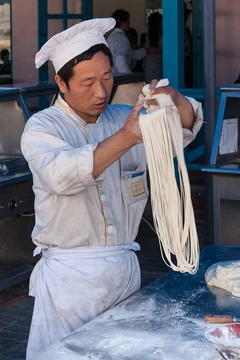
Soba
Japanese buckwheat noodles with a rich Edo-period heritage.
Soba (そば or 蕎麦, 'buckwheat') are Japanese noodles made from buckwheat flour, with varying amounts of wheat flour mixed in. They have an ashen brown color and a slightly grainy texture, served either chilled with a dipping sauce or hot in a noodle soup. Soba is used in a wide variety of dishes and can be found from fast food venues like standing-up-eating stalls to expensive specialty restaurants.
- field
- Cuisine
- nationality
- Japanese
- known_for
- Buckwheat noodles, traditional Edo-period food, toshikoshi soba
Lore & Background
The tradition of eating soba among ordinary people arose in the Edo period (1603–1868), centered around the city of Edo (modern Tokyo). The earliest references to soba are associated with Buddhist monasteries and tea ceremonies. The 1643 cookbook Ryōri Monogatari is the first to contain a recipe for making soba. After the Great Fire of Meireki in 1657, soba shops became increasingly common in Tokyo. At first considered a low-class food, its reputation improved by the 18th century, when it began to be eaten by samurai and other high-status peoples. One estimate states that every city block had one or more restaurants serving soba, many also serving sake, functioning like modern cafes. In 1860, a meeting in Tokyo concerning the price of buckwheat was attended by 3,726 shops, indicating the popularity of soba. Soba was also sold from mobile food stalls called yatai.
Reader's Guide
Soba holds a significant place in Japanese culinary history, particularly from the Edo period onward. Its popularity was bolstered by practical health benefits: much of Edo's population suffered from beriberi due to high consumption of white rice, which is low in thiamine, while soba is high in thiamine and helped prevent the disease. The noodles are made by slicing dough into thin noodles; modern soba is usually made from a mix of 80% buckwheat flour and 20% wheat flour. Soba is traditionally eaten on New Year's Eve in most areas of Japan as toshikoshi soba ('year-crossing soba'), and in the Tokyo area there is a tradition of giving out soba to new neighbors after a house move (hikkoshi soba), though this practice is now rare. Regional differences exist: soba is more popular in the Kantō region (eastern Japan), while udon is more popular in the Kansai region (western Japan). Soba continues to be popular in modern times, sold at railway stations, yatai food stalls, and dedicated restaurants, some of which are traditional establishments whose names have passed down over time.
Did You Know?
- The word soba means 'buckwheat'; the full name for buckwheat noodles is soba-kiri ('buckwheat slices').
- The first specific reference to buckwheat noodles (soba-kiri) comes from a record of 1574 kept at Jōshō-ji temple.
- Soba was regularly eaten in the Edo period to prevent beriberi, as it is high in thiamine.
- In Okinawa, soba generally refers to Okinawa soba, made from wheat flour.
Frequently Asked Questions
What is Soba?
Soba refers to Japanese noodles made primarily from buckwheat flour, often blended with some wheat flour to hold the dough together. They are a staple of Japanese cuisine with roots stretching back to the Edo period.
What do Soba noodles look and feel like?
They have a distinctive ashen-brown color and a slightly grainy, rustic texture compared to wheat-only noodles. The buckwheat gives them an earthy, nutty flavor that sets them apart from other noodle types.
How is Soba typically served?
Soba comes in two main styles: chilled noodles paired with a dipping sauce, or hot noodles submerged in a broth-based soup. Both presentations are common across Japanese dining, from quick standing-eating stalls to high-end specialty restaurants.
What is toshikoshi soba and why is it important?
Toshikoshi soba is the tradition of eating long soba noodles on New Year's Eve to symbolize a long, healthy life in the coming year. It is one of the most recognized cultural rituals associated with buckwheat noodles in Japan.
What makes Soba culturally significant in Japanese food history?
Soba carries a rich Edo-period heritage and is considered a traditional food deeply woven into Japanese identity. Its versatility allows it to appear in everything from casual street-food counters to elaborate multi-course meals, making it a constant presence across all levels of Japanese dining.
More in Pasta & Noodles 1-21
Spotted an error? Know more?
This is a living reference — every entry is fact-audited, and reader corrections feed straight into our audit queue. Suggest an edit · See this site's audit record